
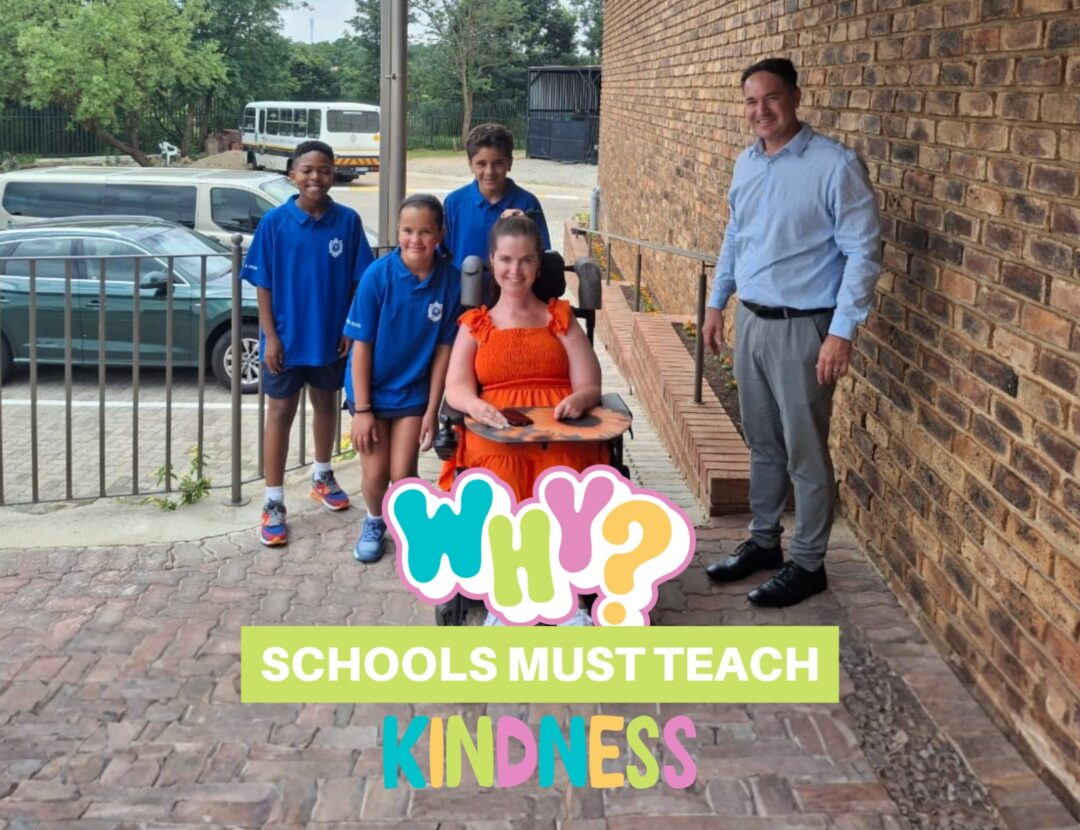
“For most of my life, growing older was never something I feared. It was something I wasn’t sure I would get the chance to do.”
In a world that often celebrates achievement, competition, and success, I believe there is one lesson that deserves just as much attention in our schools: kindness.
Kindness might seem simple, but its impact can be life-changing. For many young people, school is where they learn not only maths, science, or history, but also how to treat others, how to understand differences, and how to build the kind of world they want to live in one day.
As someone who lives with Spinal Muscular Atrophy and uses a wheelchair, I know firsthand how powerful kindness can be.
But I also know how confusing it can be growing up feeling different.
Growing Up Feeling Different
Growing up with a disability was sometimes confusing. As a child, I knew I wasn’t able to do everything the same way as everyone else, but I was also determined to try. I often made a big effort to fit in, especially when it came to doing what everyone else was doing.
There were moments where I felt excluded, particularly when it came to sport and physical activities. Sometimes I even had to wear slightly different versions of the school uniform. As a child, those differences can feel very big.
But what stands out most when I think about my school years is something far more important: kindness and acceptance.
My primary school made a genuine effort to make sure I felt included. They built ramps so I could access spaces more easily, and they created an environment where I felt like I truly belonged. That sense of inclusion shaped so much of my childhood and gave me confidence that has stayed with me throughout my life.
The Teacher Who Refused to Let Me Get a Zero
One moment that has stayed with me for years involves my primary school PE teacher.
Instead of allowing me to sit out of physical education and receive a zero, he refused to let that be the outcome. Instead, he made a special effort to find ways for me to participate in my own way.
It may have seemed like a small gesture at the time, but it was incredibly powerful. It showed me that inclusion doesn’t always mean doing things the same way — it means finding ways for everyone to take part.
Sometimes the smallest acts of kindness leave the biggest impact.
Standing Out Beyond the Wheelchair
For many years, I tried very hard to stand out more than my wheelchair.
I wanted people to see me first — my personality, my humour, my determination — rather than the fact that I used a wheelchair.
Over time, I’ve come to understand something important: people will often choose to see what you show them. When you live authentically and confidently, you give others permission to see the whole person in front of them.
That journey of understanding didn’t happen overnight, but it has been one of the most valuable lessons in my life.
Why I Speak to Students
When I speak at schools, I don’t just share my story. I share the lessons that came from those experiences.
One of the most incredible parts of speaking to students is seeing the moment when something truly connects. You can often see it in someone’s eyes when an idea or message really lands.
Some of the most meaningful moments happen after the talk, when students come up to speak to me. Often they are the ones who connected most deeply with the message, and those conversations remind me why these talks matter so much.
The Lesson I Wish Every Student Could Learn
If I could teach students across South Africa one lesson, it would be this:
Keep an open mind and be willing to learn.
The world is full of people who look different, live differently, and experience life in ways you may not fully understand yet. But difference is not something to fear — it’s something to learn from.
When young people grow up understanding that everyone’s journey is unique, they become adults who build kinder and more inclusive communities.
Why Schools Must Lead the Way
Schools play a huge role in shaping how young people see the world.
Creating inclusive environments isn’t just about physical accessibility, although that is important. It’s about helping students understand and appreciate differences, and ensuring that everyone feels seen and valued.
I believe schools can do even more to talk about diversity, disability, and the many ways people experience life. When students learn about these things early, they enter the world with greater empathy and understanding.
A Message to My Younger Self
If I could go back and speak to my younger self sitting in that classroom, I would probably say something simple:
Don’t take everything so seriously.
I would remind myself to enjoy the small moments more, to worry less about fitting in, and to understand that being different isn’t something to hide.
Because the truth is, fitting in isn’t always the answer.
Sometimes the greatest impact we can have comes from embracing exactly who we are.
And when we do that, we give others permission to do the same.


